AGROECOLOGY
Creating Compost at Amaviora Farm: Challenges and Benefits of Regenerating Our Land in Santo Tomás
6 min read
Making compost is easy... right? Just gather organic matter, wait, and done. But when you do it on a large scale, on a sloped terrain, with the goal of reversing years of chemical agriculture, the story gets much more interesting.
Compost as a Starting Point: How We Are Regenerating the Soil at Amaviora Farm
Making compost sounds simple. Gather organic matter, wait, and done. But when you do it on a large scale, on a terrain of ravines, with the goal of reversing years of chemical agriculture, the story gets much more interesting.
This article was born from a morning on the farm, recording while Milton, Mauricio, and I built a pile. What I'm going to share here is what we've learned, what went wrong, and why we believe this matters beyond just fertilizing the land.
The Team
I've known Milton since we were 15 years old. Now we're in our early 30s, so we've been friends for more than half our lives. When I was assigned as the manager of Amaviora Farm, I knew I would need people I could trust to execute something so big.
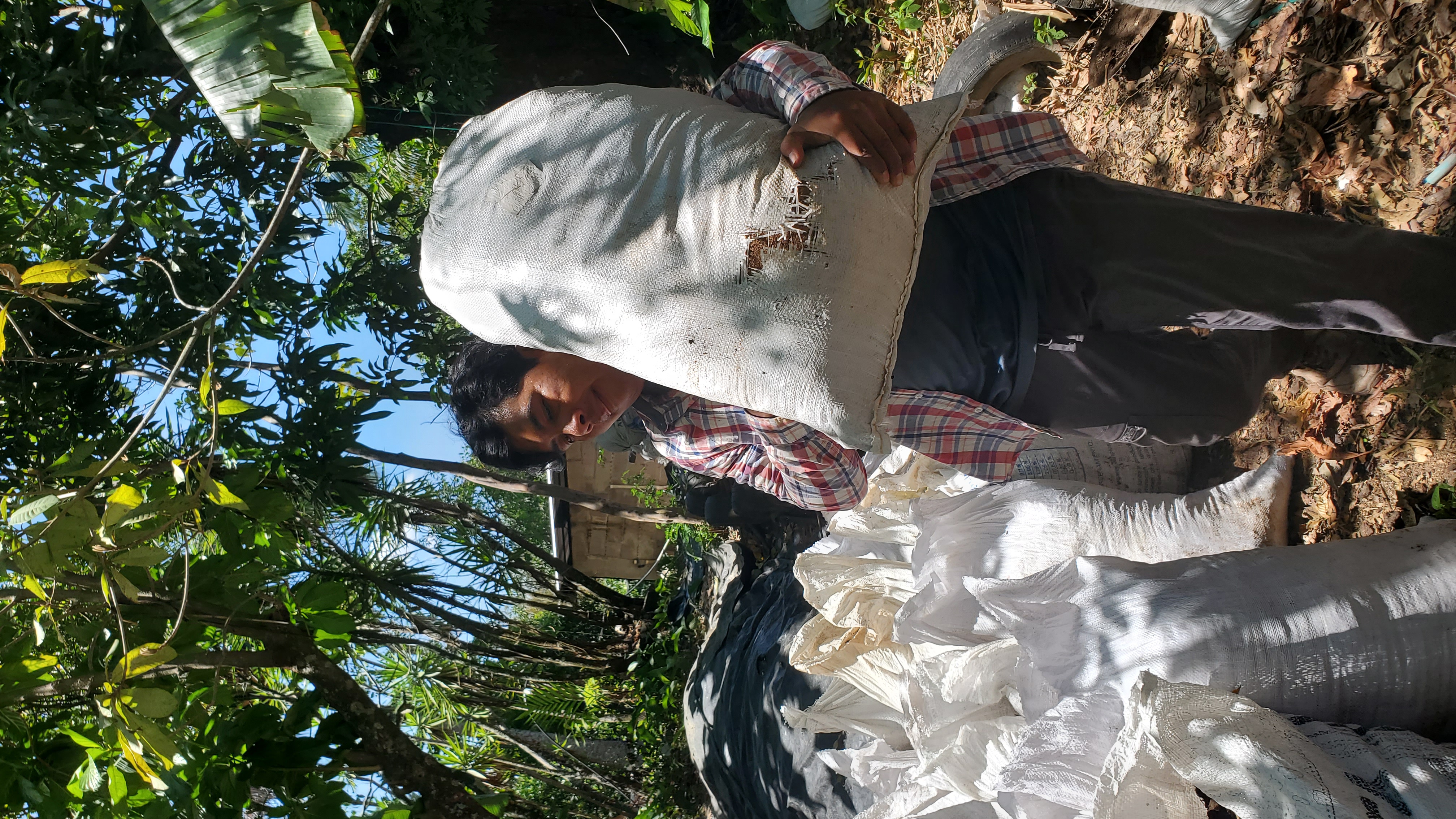
Milton had already told me about his friend Mauricio (now my friend too), with whom he had worked on planting projects, gardens, and raised beds during their agroecology studies at the Lutheran University of El Salvador. They both knew what they were doing. I invited them to join.
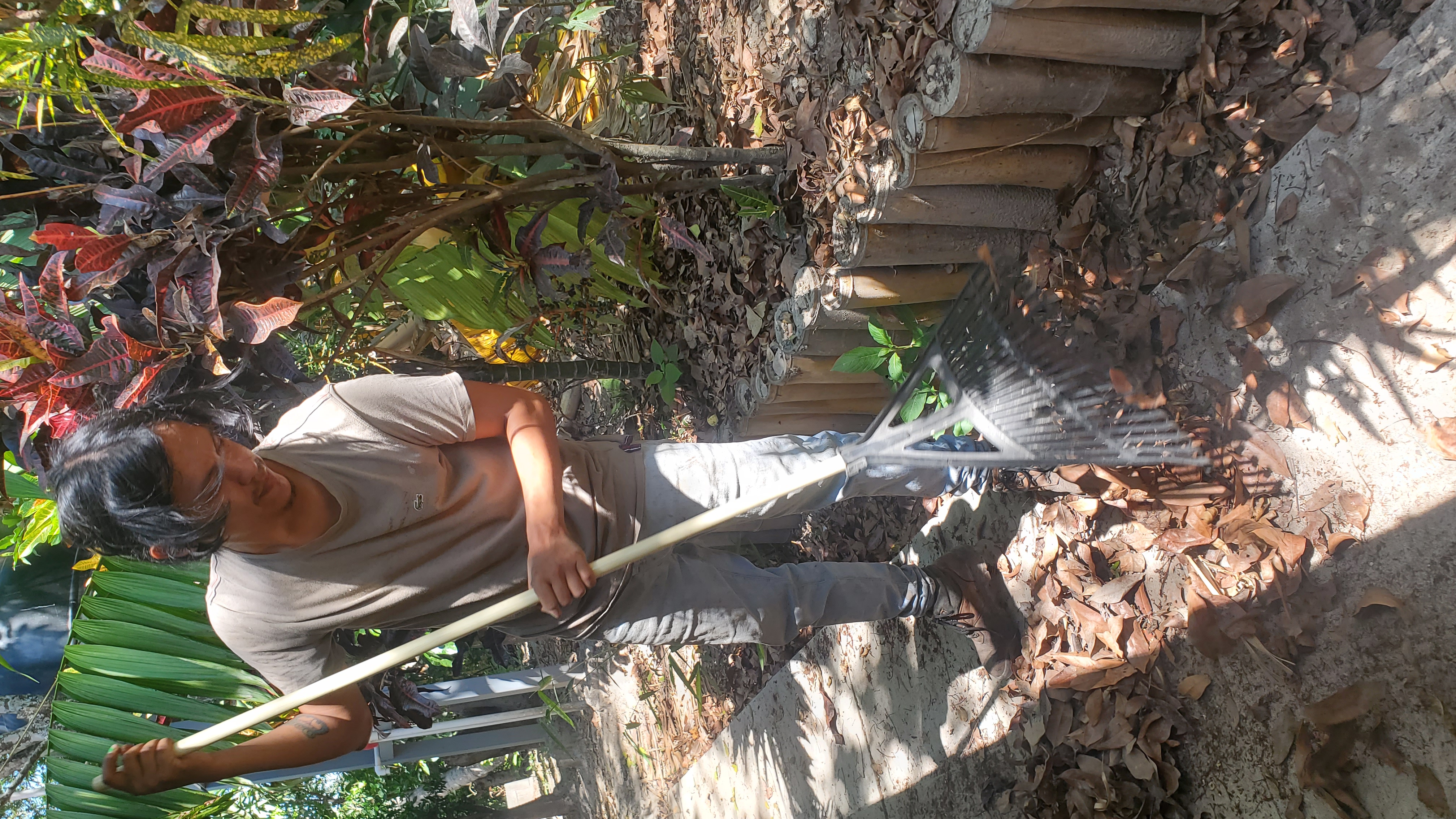
At first, it was part-time or intermittent visits, almost for the pleasure of coming to see what we could plant and work on. Over time, it solidified, and today we work together almost every day (or at least I try 😂 don't lynch me).
Why We Started Making Compost
Amaviora Farm is located in the municipality of Santo Tomás, in the department of San Salvador. Its owners, Beth and Brent, bought it with a clear goal: to turn it into the healthiest farm in El Salvador.
The problem was that the land came with history. Farmers who had worked that area for years had done so with traditional methods: chemicals, pesticides, synthetic fertilizers. There are parts of the farm that are practically intact, and others that show the damage of that history in soil erosion and the absence of microbial life.
To transition to a 100% agroecological farm, all of that had to be replaced. And compost was the inevitable starting point.
How to Build a Pile
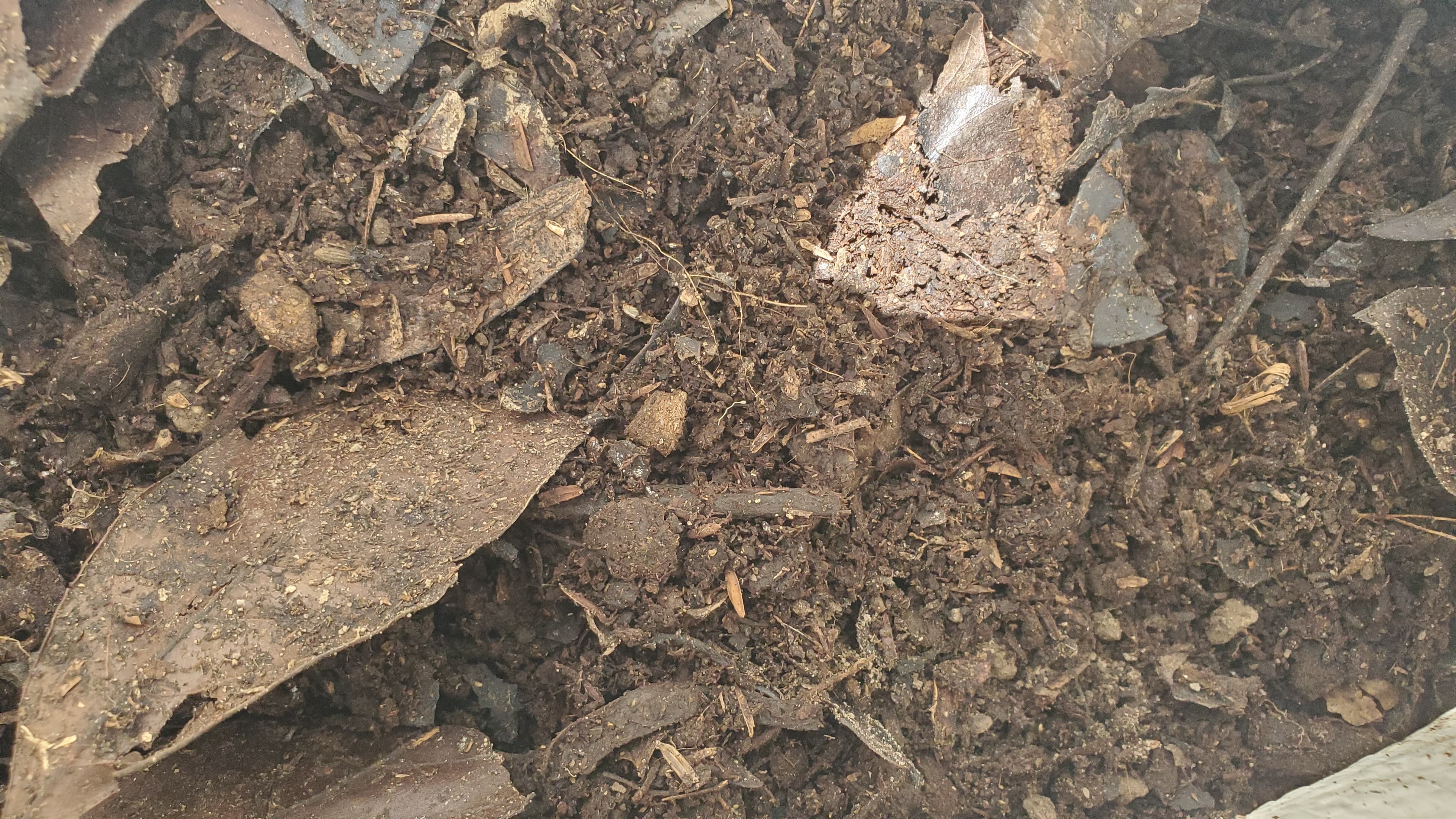
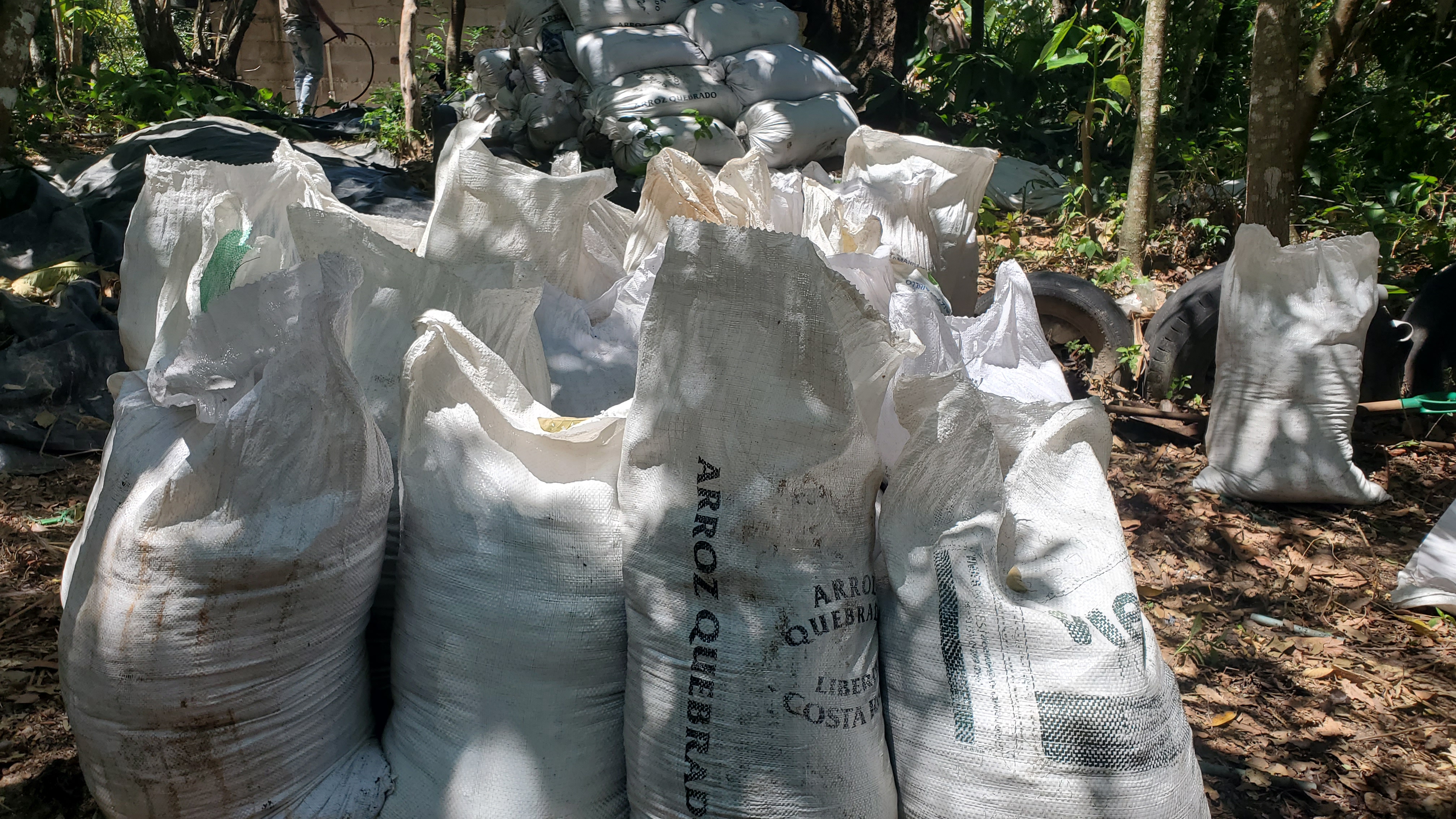
The formula we are currently using is 8 bags of dry leaves, 27 bags of cow manure, and a recent incorporation of sawdust. The carbon-nitrogen ratio we aim for is around 30:1, although in practice the calculations adjust on the fly: the bags don't always weigh the same, the leaves pack differently depending on the season, and in the middle of summer, the cow manure arrives drier than in winter.
Sawdust is a new addition. For a while, we avoided it because lignin is difficult for bacteria to decompose and requires fungi to process. But we found an approach that divides the work into phases: first, the bacteria handle the simple carbon and raise the pile's temperature, and once they're done, the fungi come in to colonize the material and process what's left.
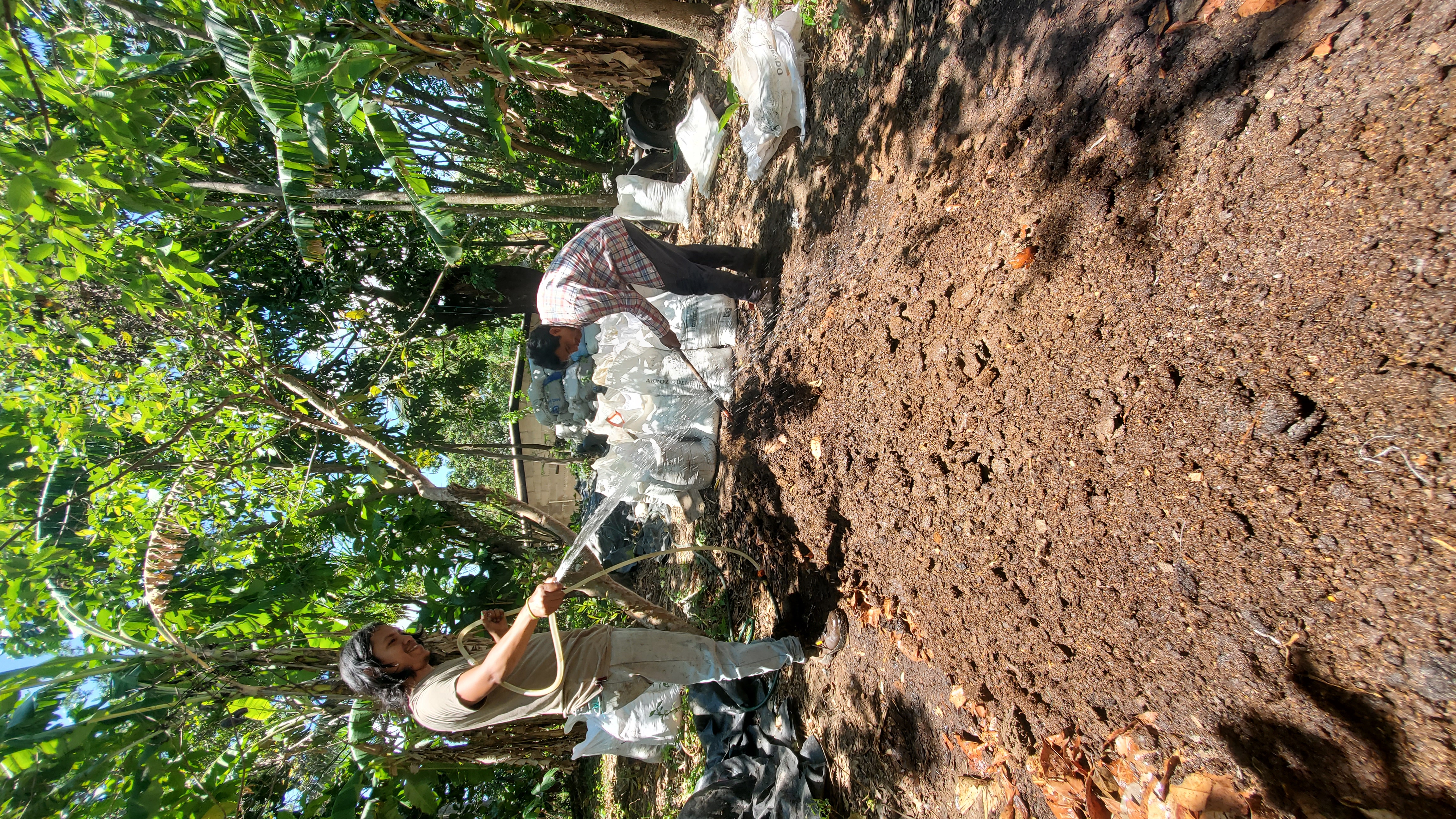
A detail many don't consider when making compost: the terrain. Amaviora Farm isn't flat, and there are ups and downs all the time (stay tuned for a post about the pulley system we plan to make), and each bag that is carried and transported represents a real risk if not stepped on properly. As Milton jokingly said: "we're not goats."
The Fruit Bioferment
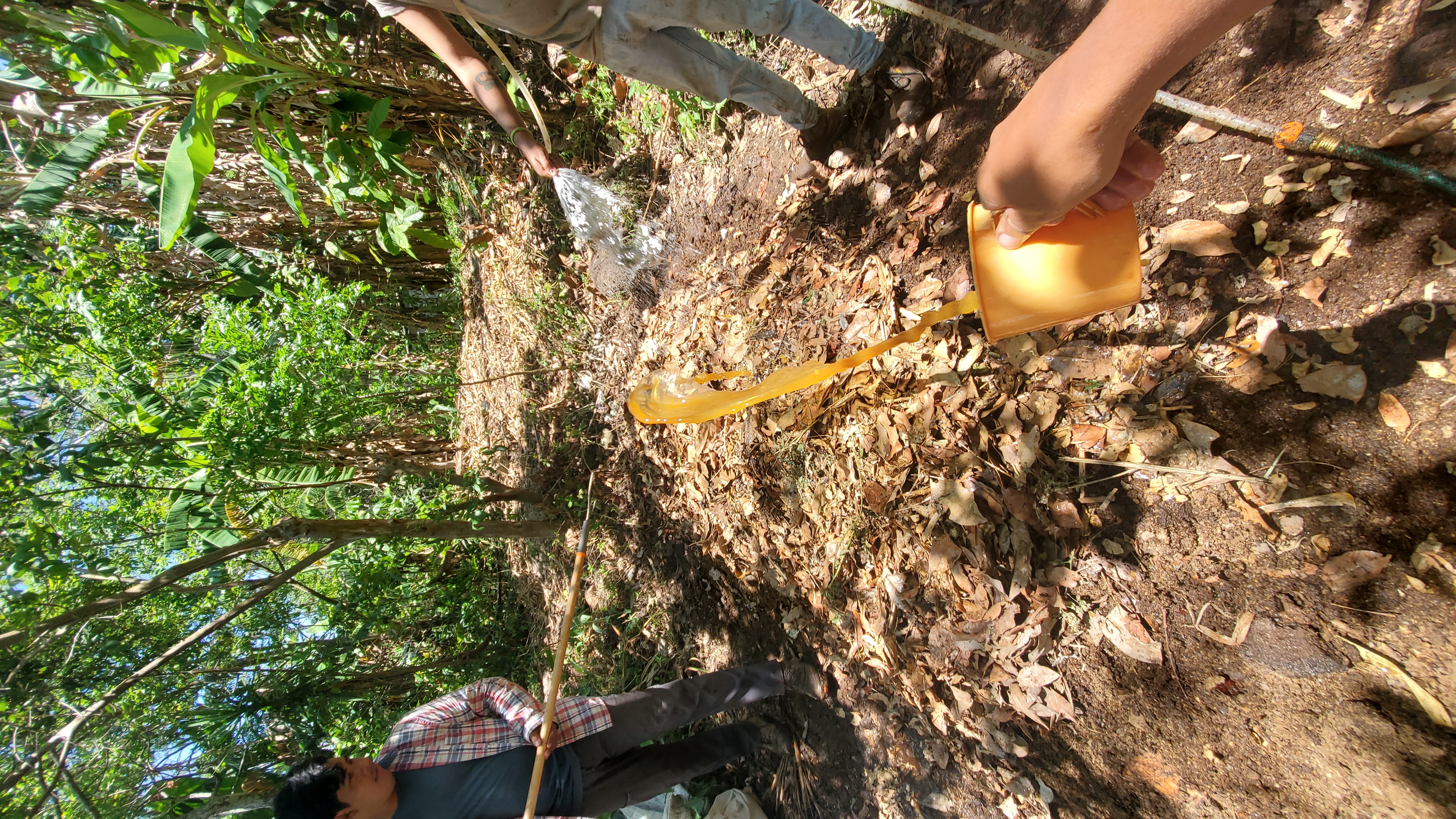
During the process, Mauricio incorporates a sweet-smelling yellow liquid that catches attention. It's a microbial accelerator made with ripe fruit: plantains and, now that the season is starting, also mango.
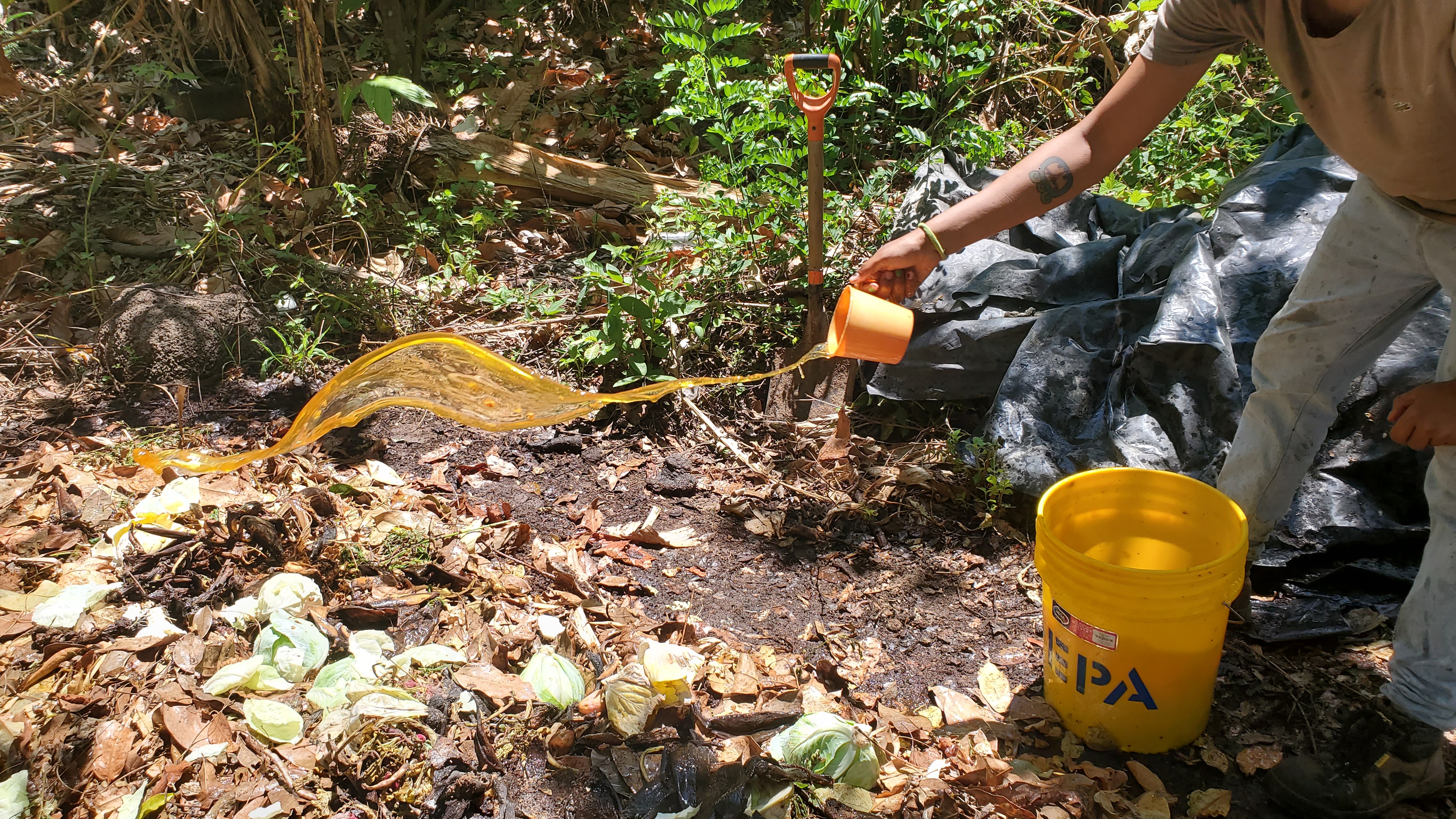
Both grow naturally on the farm, and we're currently not harvesting all they produce. Instead of wasting them, the fruit that falls or we don't manage to pick goes straight into a 100-liter barrel with 1% molasses. It ferments for 7 days, is renewed weekly, and is incorporated into each new pile we make.
It's circular economy in its most basic form: nothing is wasted, everything is transformed.
The Microscope as a Tool of Certainty
Each pile we produce undergoes microscope analysis to determine the ratio between bacteria and fungi present in the finished compost.
That distinction is not minor: a compost with bacterial dominance tends to be used in vegetables and short-cycle plants. One with a higher fungal presence is destined for fruit trees and agroforestry systems.
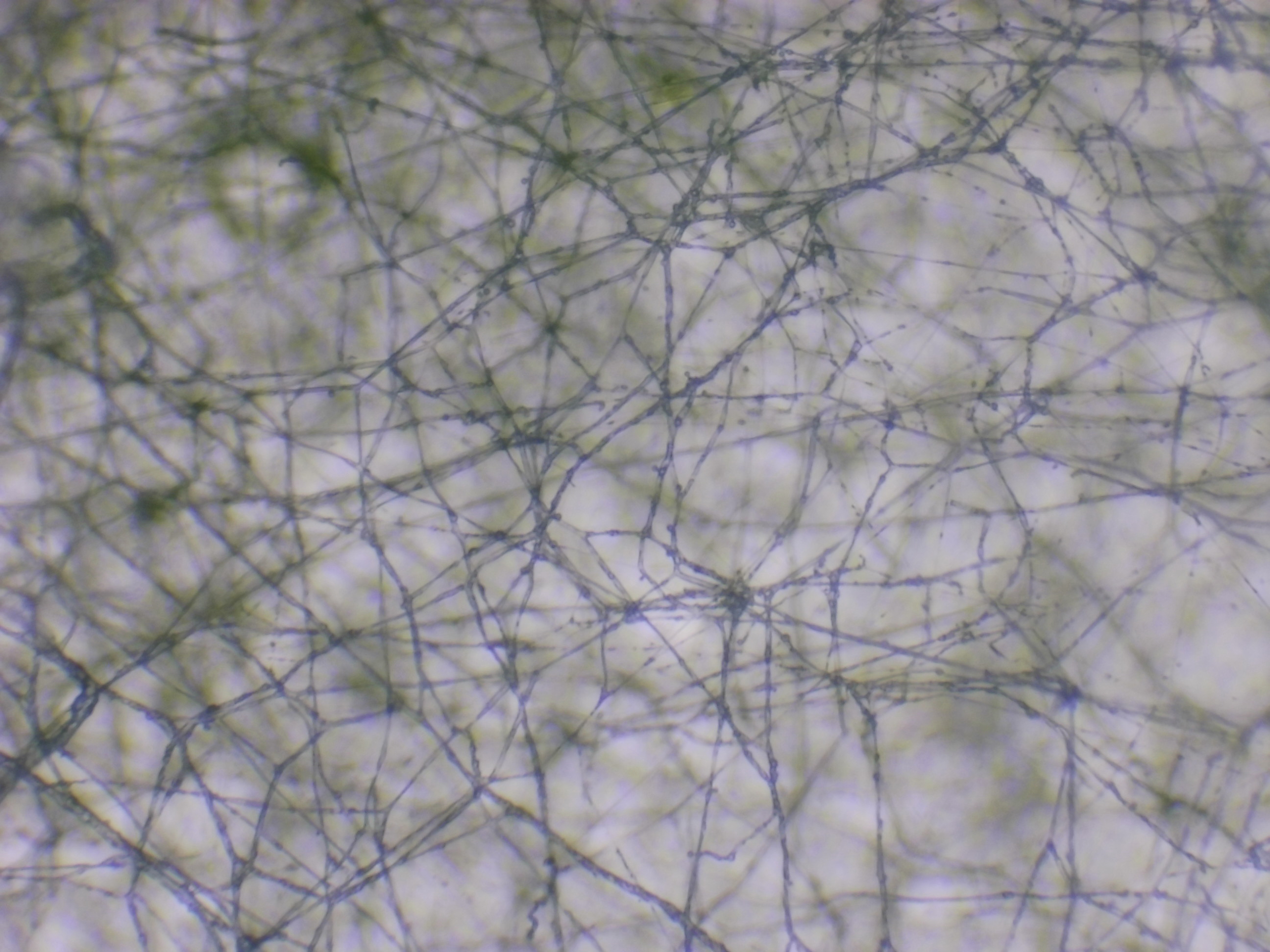
What the microscope gives us is not just information, it's certainty. Without it, we're guessing. With it, we know if what we're producing has the quality we seek before applying it.
Currently, we produce around four piles a week, each with an average of 1,500 pounds of material. That's approximately 6,000 pounds of compost working simultaneously at different stages of maturation.
The Worst Batch We've Made
One pile got filled with fly larvae.
The diagnosis was clear: too much chicken manure, poorly balanced nitrogen and carbon. The excess nitrogen created the perfect conditions for flies to lay eggs and larvae to proliferate.
The solution was to add more carbon in the form of dry leaves. That restored the balance, the temperature rose, and the pile was saved. The compost turned out good in the end, but it was an expensive lesson on the importance of precision in proportions.
Where All This Compost Goes
For now, everything we produce stays on the farm. We're using it to amend the land of farmers who have been working with conventional methods for years and are transitioning to organic practices. It's a gradual process, and compost is the main tool to recover what chemicals have been deteriorating.
The future vision is to have it available for sale, with all microscope analyses included as a quality guarantee. Not generic compost, but documented compost.
Why This Connects with Fungi
If we understand the microbiology occurring in the soil, we can build a microscopic ecosystem that ensures everything we plant is as healthy as possible. This translates into higher nutritional density in the food, but also into something harder to quantify: the energy that the land transfers to what grows on it.
Personally, I don't believe everything boils down to chemistry and physics. There's an energetic element we still don't fully understand.
And that's where fungi and agroecology practically unite for me: when a lab substrate gets contaminated with trichoderma, instead of discarding it, I take it to the farm. There, trichoderma works as a decomposition agent within the compost and eventually helps improve the crops. Nothing is waste. Everything goes around.
It's circular economy, yes. But it's also a way of understanding that every part of this ecosystem has a place, and our job is simply to learn how to connect them well.
If you're interested in learning how to make compost at home, or if you want high-quality compost with included microscope analysis, you can visit the store on this site.